In partnership with

Smart starts here.

You don't have to read everything — just the right thing. 1440's daily newsletter distills the day's biggest stories from 100+ sources into one quick, 5-minute read. It's the fastest way to stay sharp, sound informed, and actually understand what's happening in the world. Join 4.5 million readers who start their day the smart way.
Tip of the day
Most players learn to dink by doing it and hoping it improves. Coach Jess builds the push dink from scratch, and it starts with why the shot exists at all.
At the kitchen line you cannot step in and hit down, so a low ball leaves you two options. Hit it hard from low to high and it lands in their attack zone or flies out, or lift it softly with arc so it drops at their feet and forces them to hit up.
That is the whole seesaw of pickleball, and the dink is how you win it.
Start with grip. She recommends an eastern or hammer grip, with your knuckle at three o'clock on the paddle and the V of your hand around one o'clock.
The test is simple: lay your wrist back and see where the paddle points. In an eastern grip it faces forward, and in a continental grip it tends to face right or up at the sky.
Grip pressure should feel like cradling an egg. Squeezing too tight is one of the most common causes of pop-ups, so check your grip first on days when your dinks are misbehaving.
Footwork is next, and it is mostly lateral. Stay in a wide athletic stance with soft knees, push off the opposite leg to move, and double shuffle for balls further away.
Do not cross your feet. Stay parallel to the net and let your outside leg stabilize you at contact.
Contact point is where the shot is really won. Keep the ball between your feet, and make contact at least 12 to 18 inches in front of your body.
When the ball gets even with your feet or behind you, your wrist takes over and flips, and that flip is what sends dinks up into the sky. For balls dropping at your toes, either take it out of the air as a volley dink with a soft lift, or drop step back so the ball is in front of you again.
The stroke itself is small. With that light grip, lay the wrist back, let the paddle tip drift toward the ground, sink into your loading leg, and push forward from the shoulder.
No elbow, no wrist, no backswing behind your body. She describes the path as ground to tabletop, and points the paddle face wherever you want the ball to go, because the paddle face does not lie.
The backhand is the same shot with one change. Instead of tip down with the palm forward, it is tip down with the knuckles forward, staying relaxed and pushing those knuckles toward your target.
Key points
Make contact 12 to 18 inches in front of your body and keep the ball between your feet.
Use an eastern grip, checking it by laying your wrist back to see whether the paddle faces forward.
Hold the paddle as lightly as you would cradle an egg, since a tight grip is a frequent cause of pop-ups.
Shuffle laterally without crossing your feet, and drop step back when a ball is falling at your toes.
Push the dink from your shoulder with the paddle tip down and no backswing behind your body.
Deal of the day
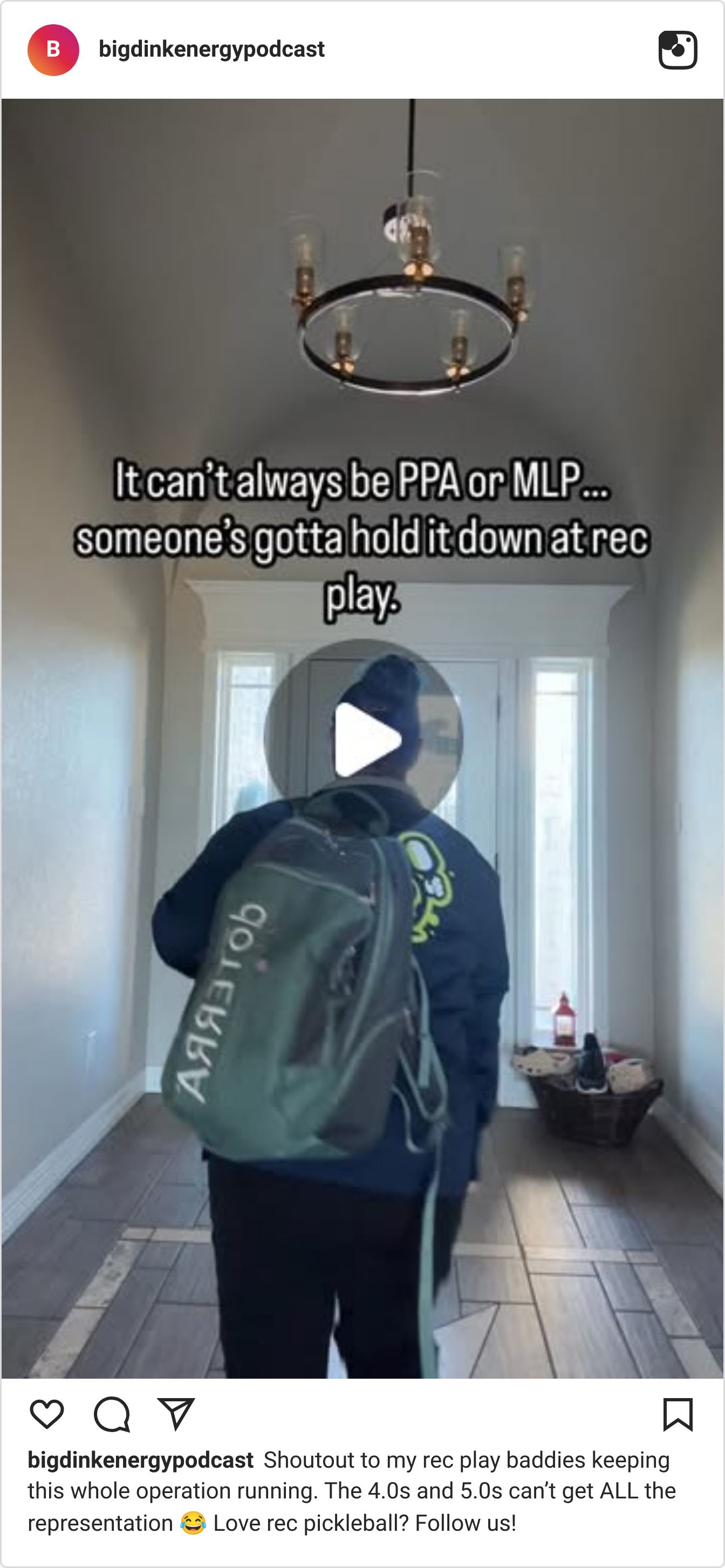
Meme of the day
Rec play is the best play 🤣
That’s it for today! As always, thank you for reading. 🙏
What did you think of today’s newsletter? Please reply with how you think I can improve. I read your feedback and appreciate all of it (for real)! 😄
Happy pickling,
Paul
