Sponsored by

Want chef-crafted, dietitian-designed meals ready in 2 minutes?

Try Factor, America's #1 ready-to-eat meal delivery service.
Made from ingredients you recognize. Whole food. Nothing unnecessary. Let’s eat real.
Get 50% off your first Factor box + Free Breakfast for a year *1 free breakfast item per box for 1 year while subscription active.
Tip of the day
Fast hands at the kitchen line are not about swinging faster. They come from a compact push and from doing your preparation between shots rather than during them.
Take the paddle to the ball with your palm on the forehand and your knuckles on the backhand. Snapping the wrist back first ruins your timing and drains your elbow of push-through power.
Think about pushing a bowling ball across a shelf rather than swatting at it. The motion stays small and the pace stays consistent, and that is what keeps counters landing.
Let the ball come into your body instead of reaching out to meet it. Line the contact point up with your torso so a small twist of the body supplies the power, and note that a one handed backhand is the one shot you take slightly further in front.
If your counters feel weak, check your lean. Nose over toes, or eyes over thighs, puts your body weight behind the ball, while leaning back leaves you with no pace to work with.
Your paddle should point at wherever the ball is, and exactly where you set it is personal. Sitting at 11 o'clock shades you slightly to the backhand, and a backhand dominant player might sit closer to 10.
Finish each volley facing where the next ball is likely to arrive. A crossbody counter finishes naturally in that direction, and keeping the paddle above your wrist stops you getting chicken winged and jammed up.
Anticipation is preparation, not guessing. You do the work between shots by prepping toward the likely target, and once your opponent makes contact you stop anticipating and simply react.
A ball usually keeps the momentum you gave it, so a counter you hit straight ahead comes back in a triangle in front of you. That tells you where to set your paddle before the ball is even struck.
To train the reaction itself, have a partner hold two balls and fake a tossing motion so you cannot tell which one is coming. You are not allowed to move your paddle until you know, which breaks the habit of panicking and guessing.
Key points
Take the paddle to the ball with your palm on the forehand and your knuckles on the backhand.
Snapping the wrist back first ruins your timing and drains your elbow of push-through power.
Line the contact point up with your torso so a small twist of the body supplies the power.
Nose over toes puts your body weight behind the ball, while leaning back leaves you no pace.
Have a partner fake a toss with two balls so you cannot move your paddle until you know which is coming.
Deal of the day
Meme of the day
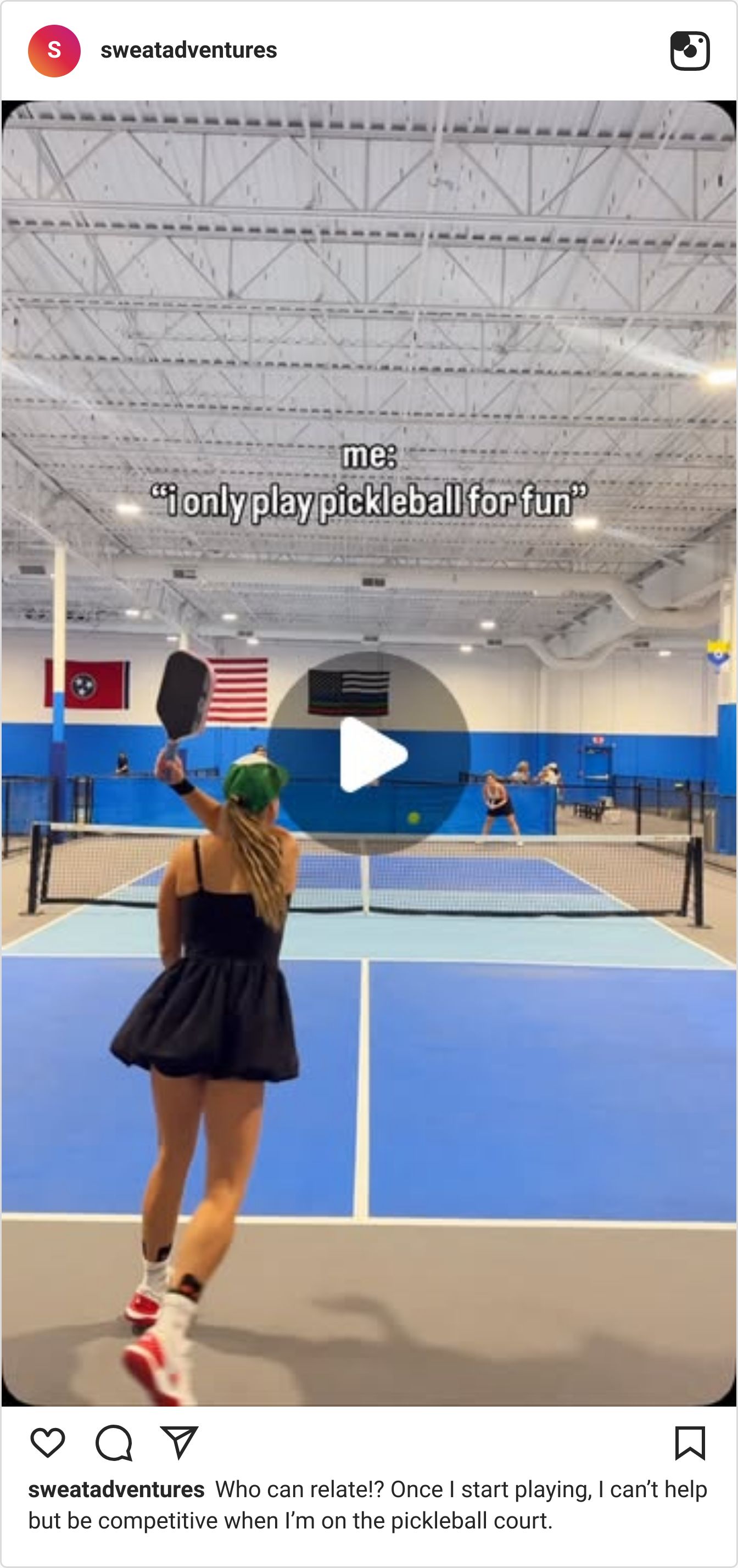
Pouting 🤣
That’s it for today! As always, thank you for reading. 🙏
What did you think of today’s newsletter? Please reply with how you think I can improve. I read your feedback and appreciate all of it (for real)! 😄
Happy pickling,
Paul
