In partnership with

Trade What Happens Next

From elections and inflation to sports, tech, and more, Kalshi lets you trade on the real-world events you already follow. Buy “Yes” or “No” contracts based on what you think will happen, then earn returns if you’re right.
Pick a market, make your prediction, and put your knowledge to work.
Bonus credit varies from $15 to $500. Terms apply.
Tip of the day
The two handed backhand counter breaks down when you try to brush up the back of the ball. At kitchen speed there is no time to shape it.
Parris Todd, ranked top five on the PPA Tour, keeps the shot flat and pushes it forward. Only balls below net height get brushed, because a flat paddle on a low ball ends up in the net or ten feet long.
The shot starts before the ball is hit. During a dink rally she watches for a slightly bigger backswing, which is her tell that a speed up is coming.
She also follows the ball. Whoever is hitting has an easiest shot, which is straight ahead at you, so she shifts to take that away and leaves the harder across the body speed up open.
A simple version of that: get your chest in front of wherever the ball bounces on your opponent's side.
Ready position is both hands out around belly button height. From there she turns her body, loads her core, and absorbs the incoming pace.
The swing stays short. A big take back makes you late, and being late on a counter means you miss it and are not ready for the next ball.
Contact happens in line with her hips, and she pushes the ball forward with her shoulders square to the net. There is no finish over the shoulder.
To avoid getting jammed she slides slightly toward her backhand once she reads the speed up, which clears the space her body was occupying. If it still catches her, she resets rather than forcing the counter.
One more fix from her critique of an amateur counter: stay with the ball through contact and then push, instead of pulling the paddle away across your body.
Key points
Watch for a bigger than normal backswing in a dink rally as your cue that a speed up is coming.
Shift to cover the straight ahead speed up, which is the easiest ball for your opponent to hit.
Keep both hands near belly button height and turn your core instead of taking a big swing.
Hit the counter flat and push it forward, and only brush up when the ball is below the net.
Slide slightly toward your backhand as you read the speed up so the ball cannot jam your body.
Deal of the day
Meme of the day
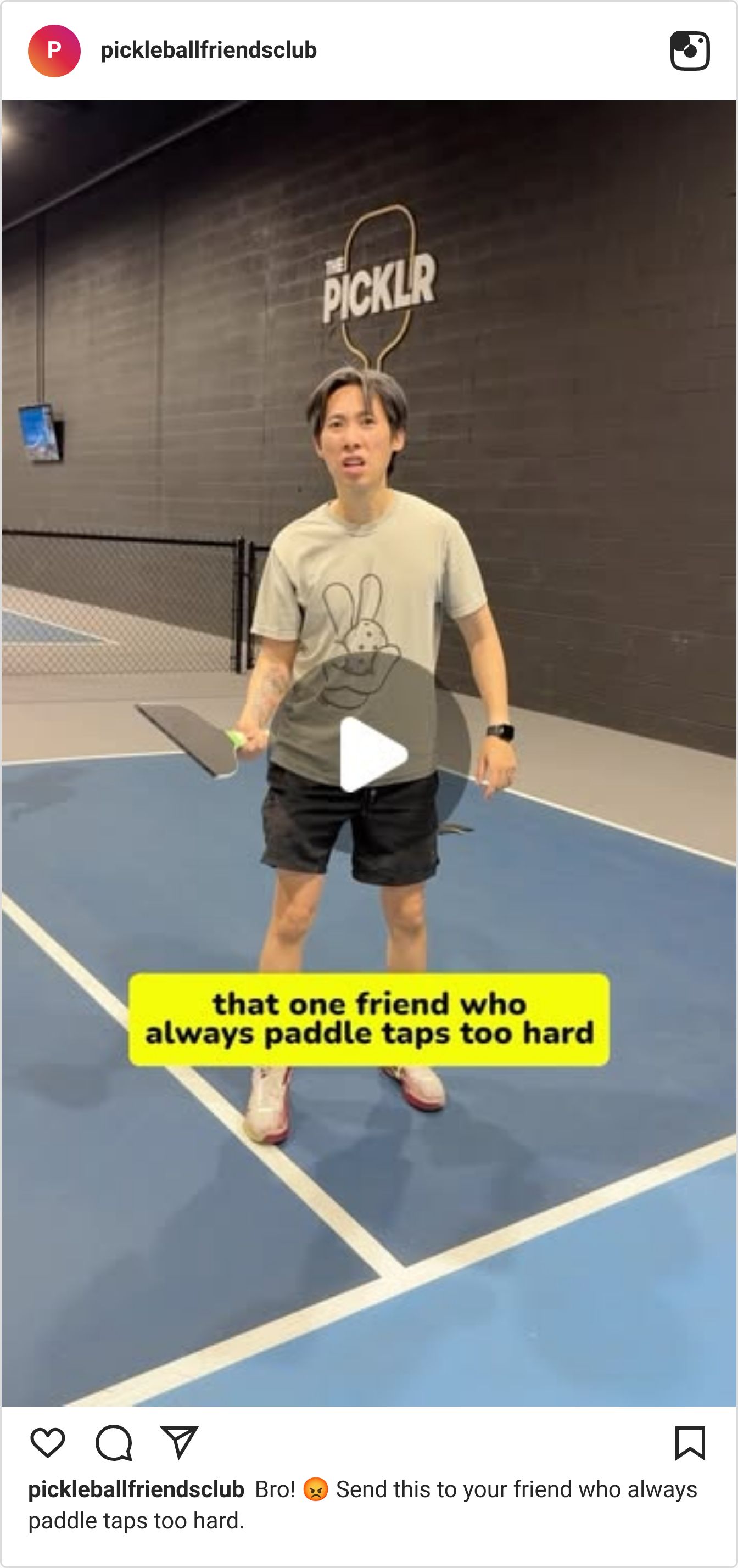
Bro… 🤣
That’s it for today! As always, thank you for reading. 🙏
What did you think of today’s newsletter? Please reply with how you think I can improve. I read your feedback and appreciate all of it (for real)! 😄
Happy pickling,
Paul
