In partnership with

No Middleman. No Markups. No Mystery.

TV advertising shouldn't be complicated.
With Universal Ads, what you spend is what runs. Choose your goal, pick your audience, set your budget, upload your creative, and go live across 20+ premium publishers. 100% self-serve with no markups.
Don't have a TV ad yet? Our self-serve tools and creative partners can help you get one made fast.
New advertisers who use code UALAUNCH26 at sign-up get $2,500 in matched ad credits when they spend $2,500.
Tip of the day
Everyone tells you to watch the ball. You've heard it a million times, and Zane Navratil's point is that on its own it doesn't even mean anything.
Start by not relying on reading the paddle. That strategy stops working once your opponent can disguise what they're doing with it.
Read the pace instead, because pace is very difficult to disguise. When you see the swing, you know a speed up is coming, you just don't know where.
Where it goes comes down to a difference at the last second that you can barely pick up. So you can't guess, you have to react.
To react, give your brain a task more specific than watching the ball. As the speed up comes, try to find the logo on the ball, or one actual hole.
It works because looking at one specific part of the ball makes the ball seem bigger, almost like zooming in. It also takes your mind off guessing where the ball is going.
Your opponent can lie to you with the paddle. The ball doesn't lie.
To drill it, feed a partner an easy dink and let them speed it up to any spot, then play it out. You can't build anticipation without seeing the same ball hundreds and hundreds of times.
Zane would still say probably 80 percent of speed ups come straight ahead and about 20 percent go crosscourt, so building that pattern recognition is big.
It won't be automatic right away, and it comes in and out even for Zane, so you have to be conscious about it.
The video shows Zane demonstrating how small that last second paddle difference between down the line and crosscourt really is.
Key points
Stop relying on reading the paddle, because that stops working once your opponent can disguise it.
Read the pace instead, because pace is very difficult to disguise.
As the speed up comes, try to find the logo on the ball, or one actual hole.
Looking at one specific part of the ball makes it seem bigger, almost like zooming in.
To drill it, feed a partner an easy dink, let them speed it up to any spot, and play it out.
Deal of the day
Meme of the day
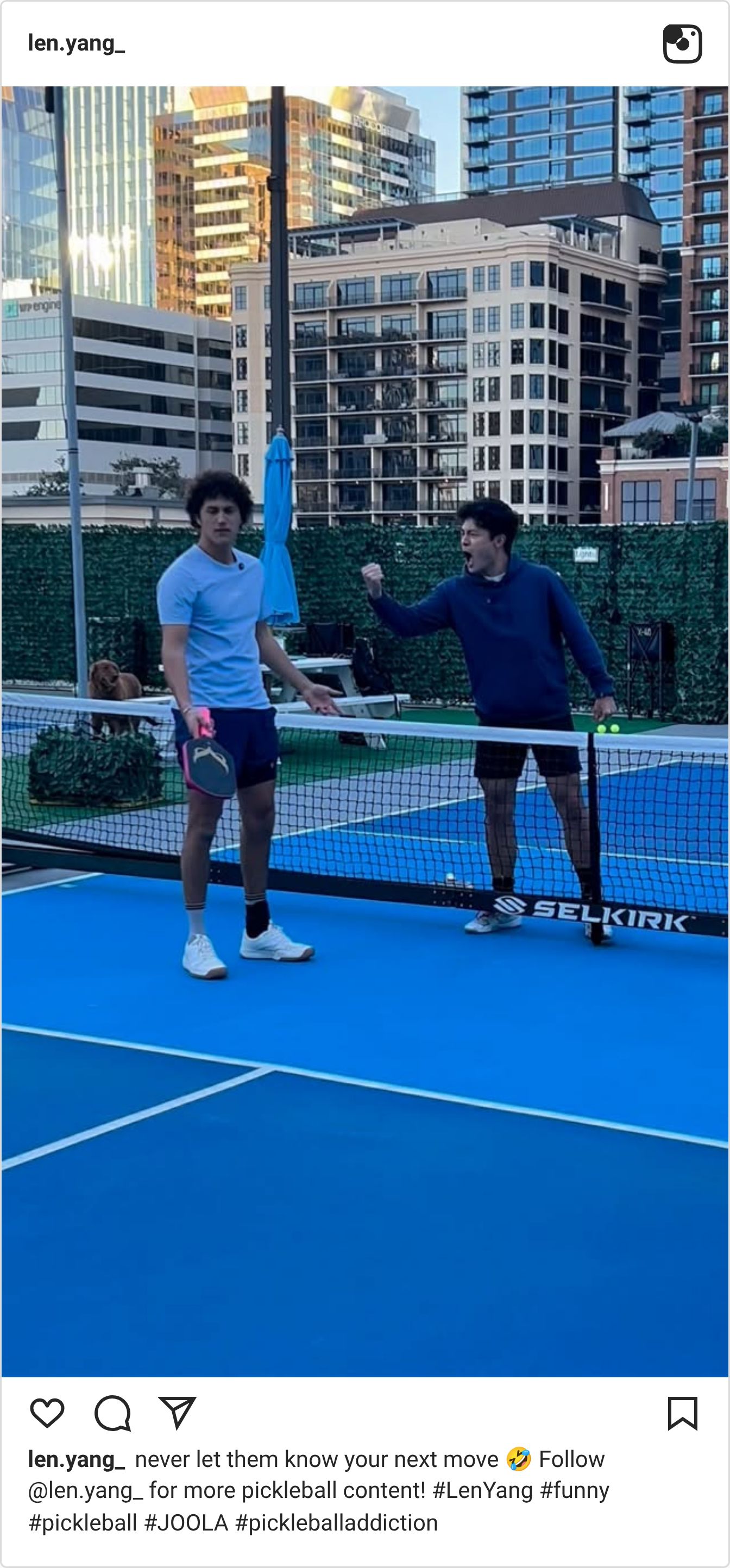
Unpredictable 🤣
That’s it for today! As always, thank you for reading. 🙏
What did you think of today’s newsletter? Please reply with how you think I can improve. I read your feedback and appreciate all of it (for real)! 😄
Happy pickling,
Paul
