In partnership with

More patients say ”Yes” with Cherry Payment Plans

Had enough of, “Let me think about it?” With Cherry, patients can apply for financing solutions on their phones in about 35 seconds - and 90% of them are approved*.
The result? Practices have seen acceptance rates rising by as much as 50%!
* These figures come from Cherry’s provider case studies, so individual results vary. Details at withcherry.com/provider-reviews. Payment options through Cherry are issued by the following financing partners: withcherry.com/financing-partners
Tip of the day
If you think back over your hands battles, you probably lost most of them in the same spot. The ball got into your chicken wing, behind your body, and you got jammed.
It happens to all of us, and it always feels like the ball sped up.
Elliott Schupp, one of the best lefties in the game, fixes this with a three stage progression that cuts the big backswing and follow through out of your counters.
Stage one is block volleys only. A block keeps your paddle out in front, so contact stays in front of your body instead of behind you where you get jammed.
Keep your elbow in front of your body, not tucked into your side. A tucked elbow hits a very weak ball and gets you jammed again, while an elbow out front lets you cover a lot more ground.
He uses an eastern forehand grip for this. You can do it in continental, but opening the forehand out front takes a lot of wrist flexibility.
Stage two adds a short follow through of about 6 inches to a foot, pushing forward through the ball. Keep it slow, because when you try to go fast too early you fall back into old habits, like using a lot of wrist.
Stage three is the same swing in the same 6 inch to 1 foot window, now hit as hard as you can while staying controlled, around 70 or 80 percent. Let the swing go out past that and you won't be ready for the next counter.
Think of it as a one two: get the paddle there like a block, then accelerate. Your power comes after the motion starts, not from a backswing, and making it one motion lets your wrist go back and sling counters long.
Swing forward through the ball, not down, and keep the swing on one level. That way whether you're a little early or a little late, the ball is probably still going in.
To build the speed, go to a wall and switch forehand to backhand as fast as you can. If you're lasting longer than four or five shots, you're probably going too slow.
Expect stage three to feel awkward at first, since even the host found it hard in a new grip.
The video earns its click at stage three, where you see how much pace Elliott gets out of a swing that travels barely a foot.
Key points
Start with block volleys so contact stays in front of your body instead of behind you where you get jammed.
Keep your elbow in front of your body, because a tucked elbow hits a very weak ball and gets you jammed again.
Add a follow through of about 6 inches to a foot slowly, so you don't fall back into old habits like using a lot of wrist.
Then hit as hard as you can while staying controlled inside that same window, around 70 or 80 percent.
At a wall, switch forehand to backhand as fast as you can, and if you last longer than four or five shots you're probably going too slow.
Deal of the day
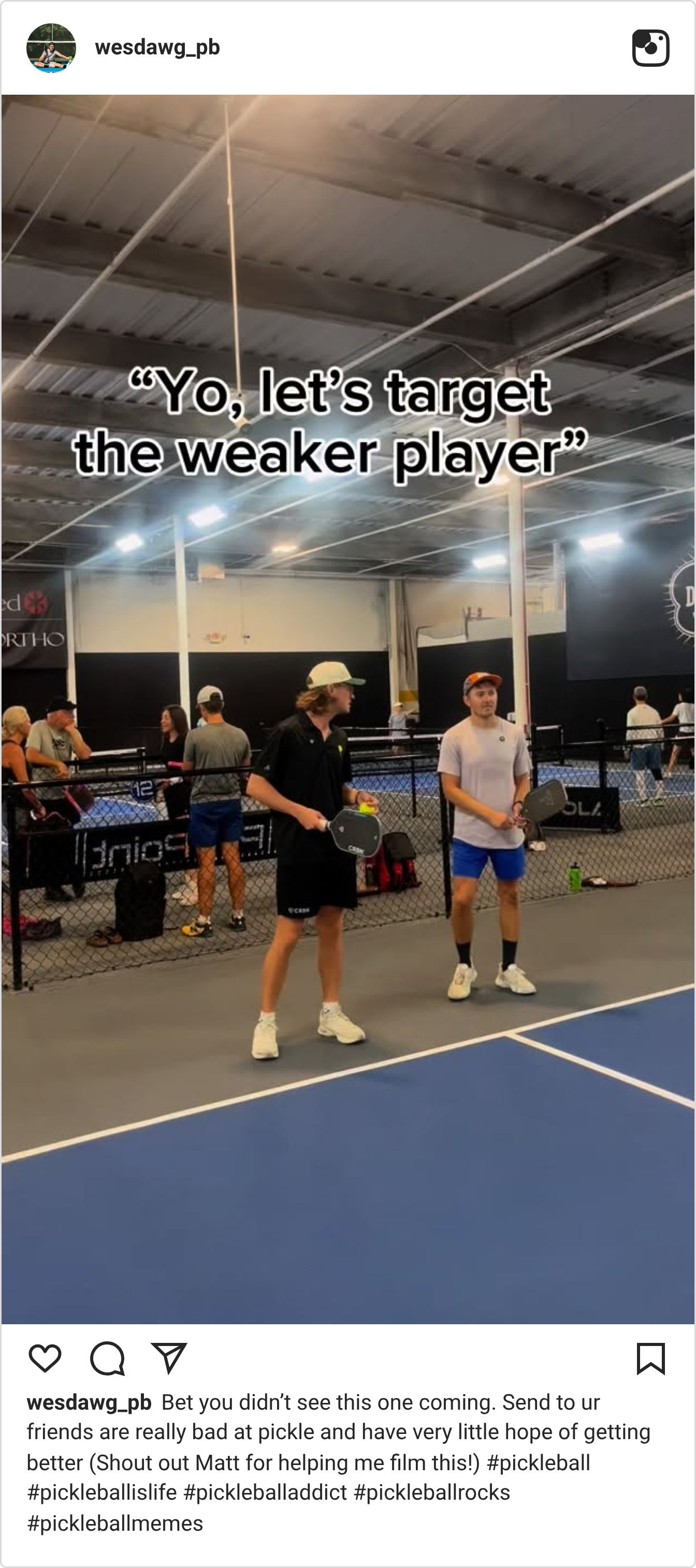
Meme of the day
Send this to THAT friend 🤣
That’s it for today! As always, thank you for reading. 🙏
What did you think of today’s newsletter? Please reply with how you think I can improve. I read your feedback and appreciate all of it (for real)! 😄
Happy pickling,
Paul
